Seeing Purple on Your QD-OLED? Here’s Why and How DarkShield Helps
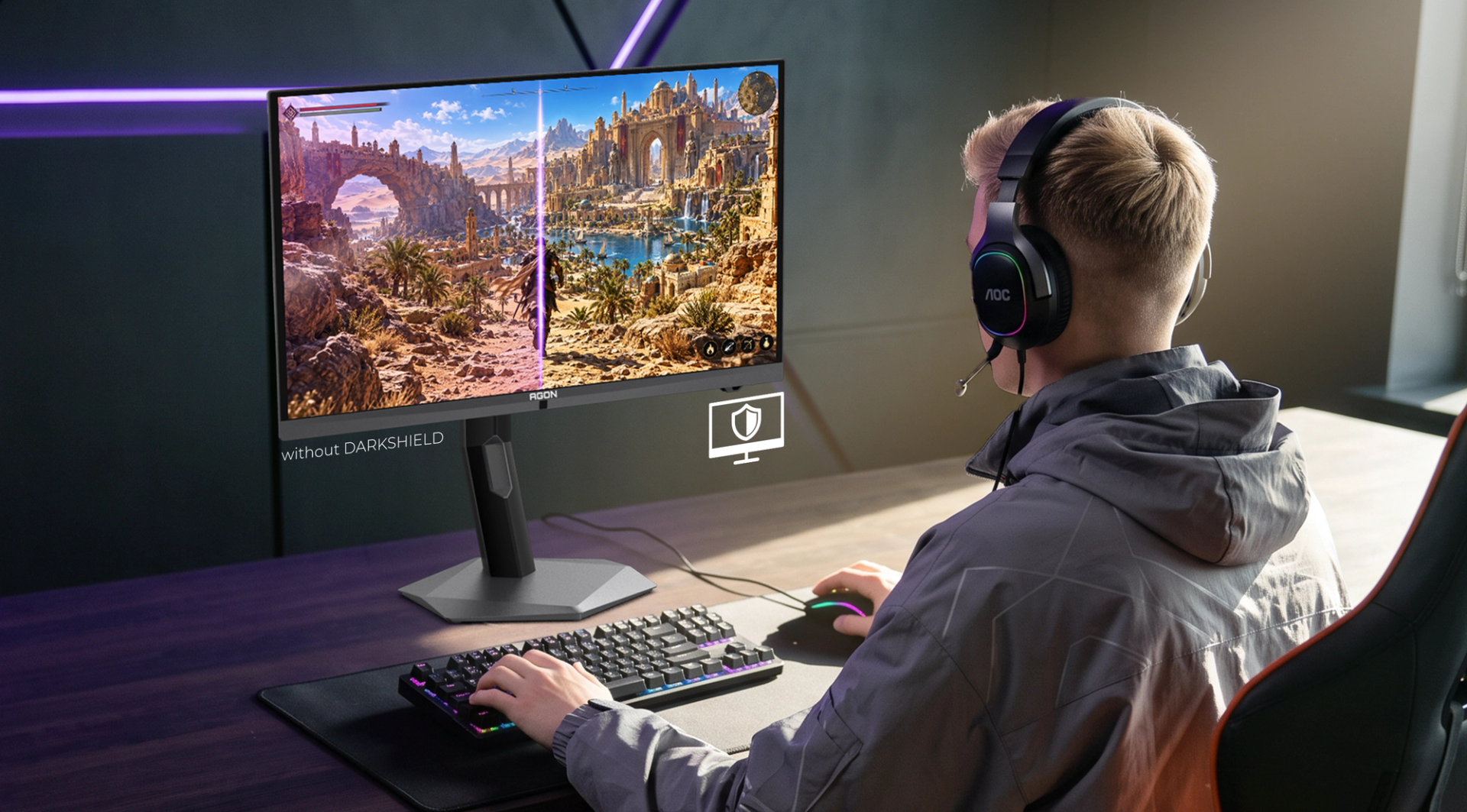
QD-OLED monitors are known for deep blacks, vivid color and ultra-fast response times. But in a brightly lit room, the screen can sometimes appear slightly purple or gray, especially during dark scenes or when the monitor is turned off.
Why Does My QD-OLED Screen Look Purple?
The short answer: ambient light can interact with the QD-OLED panel structure and make dark areas appear slightly purple. This is usually not a defect. QD-OLED pixels produce their own light, allowing individual pixels to switch off completely for exceptionally deep blacks. Quantum dots then help create highly saturated color.
But QD-OLED panels generally don’t use the same conventional polarizer found in some other display designs. This helps improve light efficiency, but it can also allow more external light to interact with the panel. When sunlight, desk lamps or overhead lighting reaches the display, some of that light can reflect and scatter inside the panel structure. As a result, black areas may appear purple, reddish or gray.
Why Is the Purple Tint Worse in Bright Rooms?
The brighter the room, the more ambient light can reach the panel.
| Lighting condition | Purple tint visibility |
|---|---|
| Dark room | Low |
| Dim indoor lighting | Low to moderate |
| Bright office | Moderate |
| Near a sunny window | High |
In a dark room, OLED pixels can deliver extremely deep blacks because black pixels produce almost no light. In a bright room, reflected ambient light can make those same areas appear lighter. That’s why moving the monitor away from a window or reducing direct light often makes the purple appearance much less noticeable.
Is a Purple QD-OLED Screen Defective?
Usually, no. A slight purple tint that mainly appears under bright ambient lighting is a normal characteristic of QD-OLED panel technology. However, if the entire image remains purple during normal use regardless of lighting conditions, the cause could instead involve:
- Display cables
- GPU output
- Display settings
- Color profiles
- Hardware issues
If the effect mainly appears in black areas when external light hits the screen, it is most likely normal QD-OLED ambient-light behavior.
Why Does It Matter If QD-OLED Already Has Perfect Blacks?
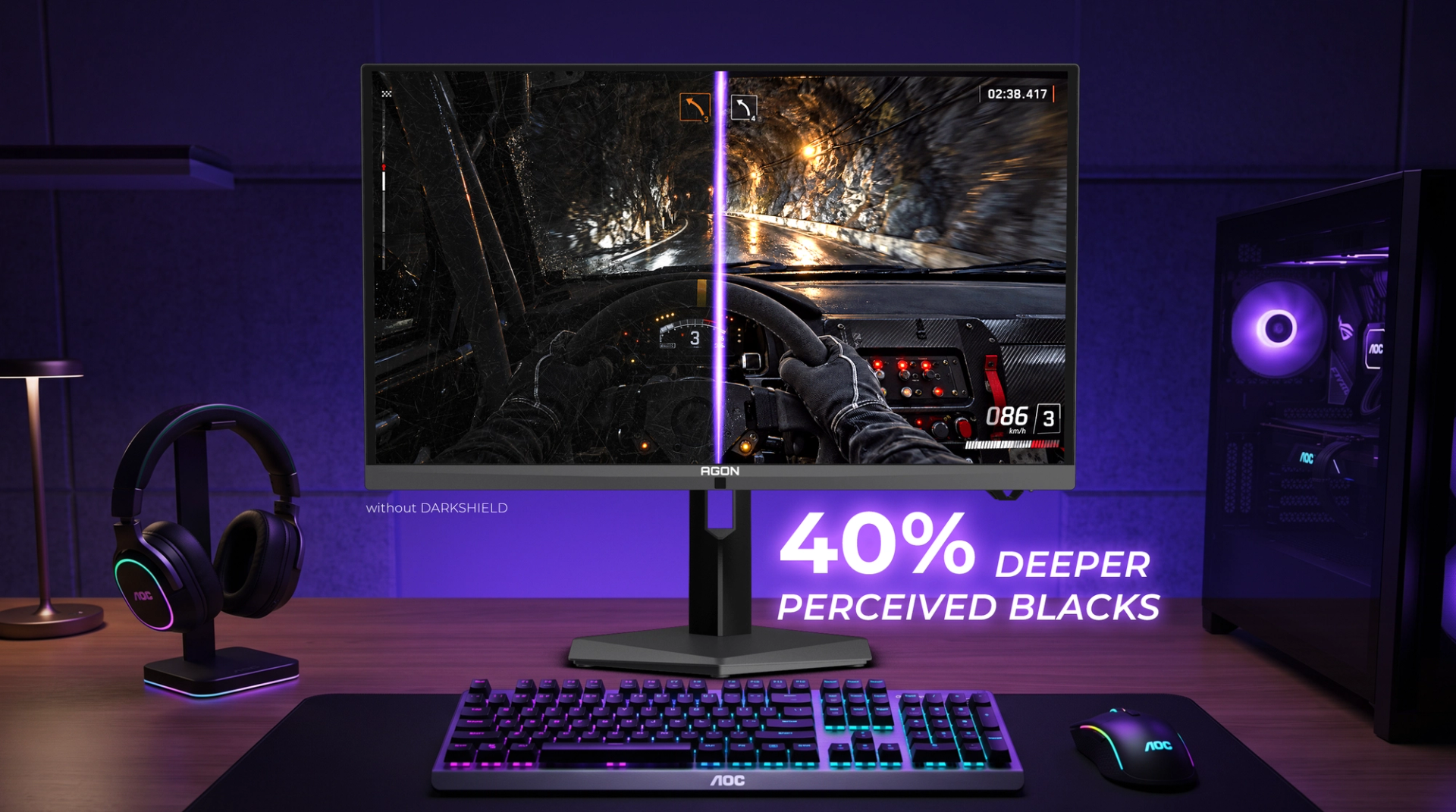
There is a difference between native black level and perceived black level. OLED pixels can switch off completely, but your eyes also see light reflected from the surface of the monitor. When reflected light makes black areas appear purple-gray, perceived contrast decreases. This can make dark games, movies and HDR content look less dramatic.
How Does AOC DarkShield Reduce the Purple QD-OLED Effect?
AOC DarkShield is designed to reduce unwanted ambient-light reflections and help black areas appear deeper in brighter environments. DarkShield uses advanced anti-reflective technologies including Black AR and Black AGLR treatments.
These help:
- Reduce reflected ambient light
- Suppress purplish reflections
- Improve perceived black levels
- Maintain stronger contrast in bright rooms
DarkShield delivers a 40% improvement in perceived black level compared with the previous generation. The result is less visible purple tint and deeper-looking blacks without requiring a completely dark room.
Does DarkShield Also Protect the Screen?
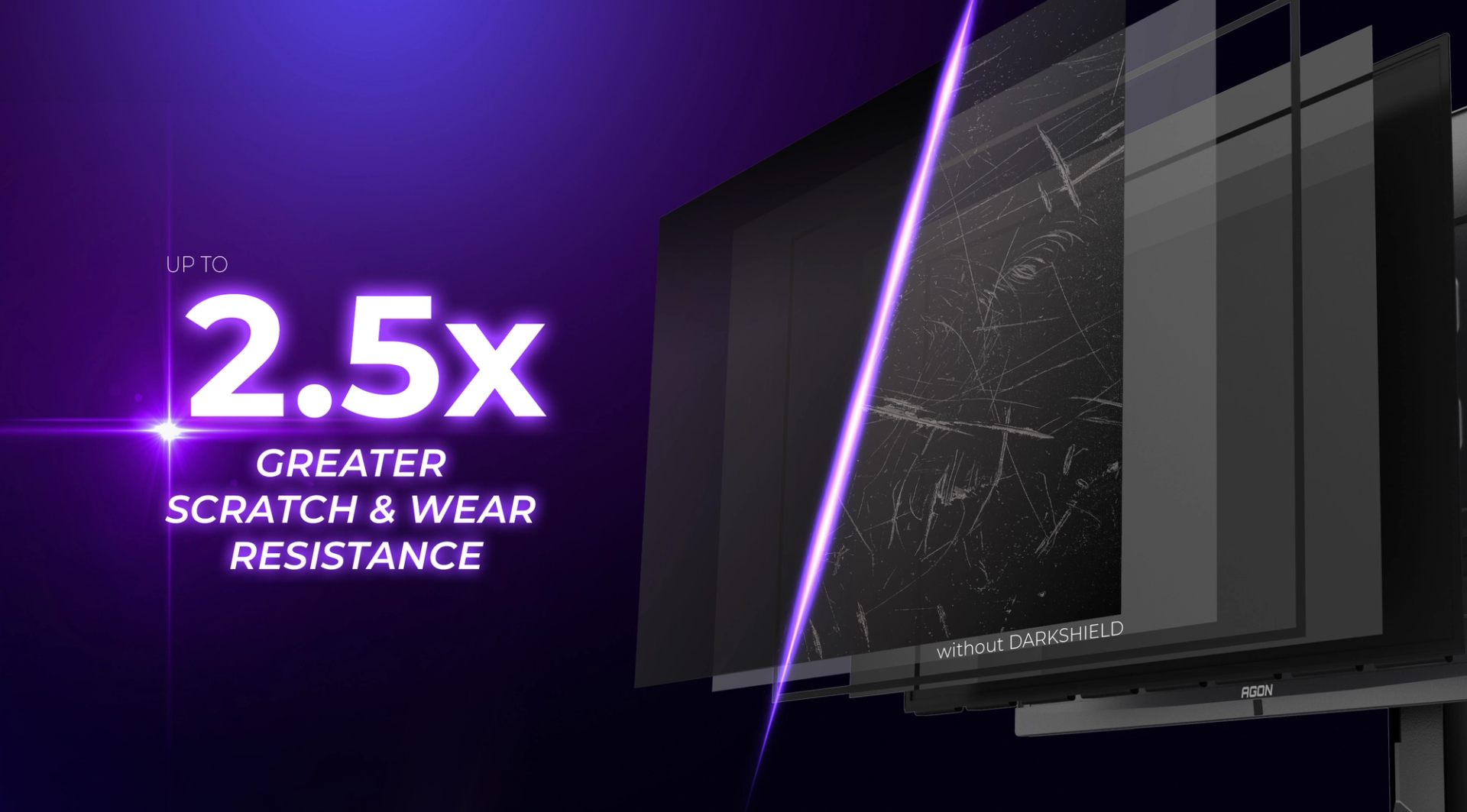
Yes. DarkShield also includes a reinforced hard-coating layer that provides up to 2.5 times greater scratch and wear resistance compared with conventional coatings. This helps reduce micro-scratches caused by everyday cleaning and wiping, although QD-OLED surfaces should still be handled carefully.
Key Takeaway
A slight purple tint on a QD-OLED monitor is usually caused by ambient light interacting with the panel, not by a defect. AOC DarkShield helps address this by reducing unwanted reflections, improving perceived black levels by 40% compared with the previous generation and providing up to 2.5× greater scratch and wear resistance. The result is deeper-looking blacks, stronger perceived contrast and a more consistent QD-OLED viewing experience across real-world lighting conditions.